
An independent shop does not automatically need a full online store. It may first need a good way to show its range, answer availability questions and bring suitable customers through the door. Another shop may be ready to take payment and organise collection or delivery.
The right choice depends on how stock, staffing and customer service work behind the counter. A Cheltenham shop's website should make a promise the business can reliably fulfil, whether that promise is "come and browse", "ask us about this item" or "buy this now".
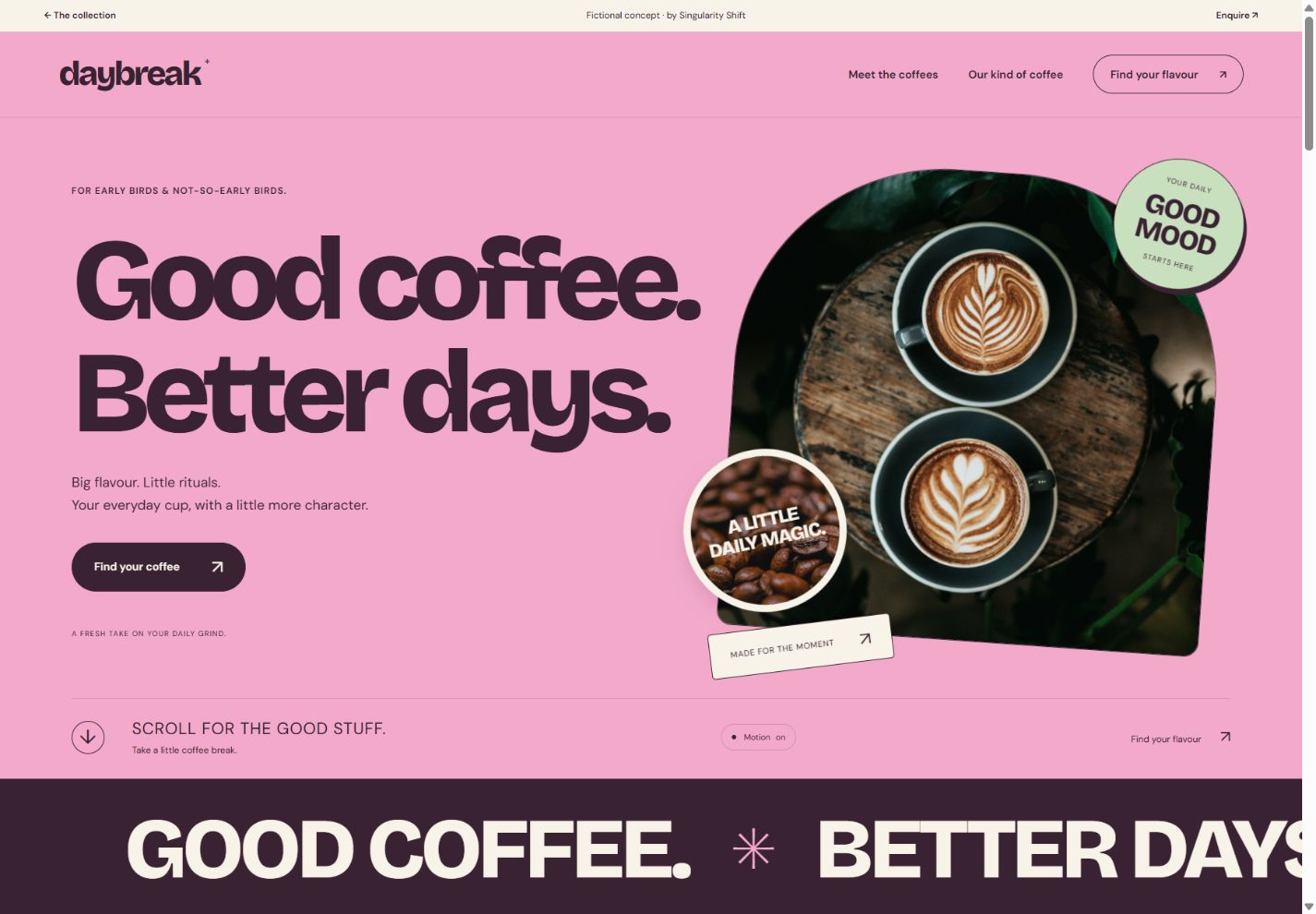
See the idea in action
DAYBREAK
Explore layered coffee imagery, a flavour finder and a personal tasting list.
Original concepts for fictional brands, created by Singularity Shift.
Choose the transaction you can support
There are several useful website models, and each creates a different expectation.
A brochure site explains the shop, its main ranges and why someone might visit. A catalogue lets customers explore individual products but sends them to an enquiry. A reservation system holds an item for collection. An online store takes an order and usually payment.
Choose the model deliberately. A product page that looks like an online shop but offers no clear next step can frustrate visitors. Equally, a checkout creates work beyond taking payment: someone must confirm stock, prepare the order and deal with collection or delivery questions.
You can start with a narrower range online while keeping the rest in store. Explain that boundary clearly so visitors do not assume the website shows everything.
Work out what "in stock" means
Stock information is only useful if it reflects the real shop. If an item sells at the till, what updates its website availability? If there is no connection between the systems, who checks it and how often?
A small range of made-to-order items needs different wording from shelf stock available today. A supplier catalogue is different again. State whether the customer is buying an item you hold, requesting a quotation or starting an order with an expected lead time.
Avoid displaying precise availability that no one can maintain. An honest "contact us to check availability" can be a better first step than a confident stock indicator that routinely disappoints customers.
Design collection as a complete process
Click and collect involves more than adding a button. Decide when an order becomes ready, who tells the customer and what they need to bring.
Consider the practical details:
- Where customers collect and during which hours.
- Whether collection is immediate or follows a ready-to-collect message.
- How long an item is held.
- How customers contact you if they cannot attend.
- What staff see when someone arrives to collect.
These decisions influence both the website and the messages sent afterwards. Keep terms and policies aligned with your actual arrangements, and seek suitable advice where your business needs it.
Example: a gift bought during a working day
Imagine a customer in Cheltenham looking for a gift they can collect after work. This is a hypothetical shopping journey, not a past project.
The product page shows dimensions, what is included and whether the item can be collected. The customer sees that collection requires a confirmation message rather than assuming payment means the parcel is ready.
After ordering, they receive the correct collection location and available hours. The shop has a matching order record. On arrival, neither side needs to search an informal message thread to work out what was purchased.
If the business cannot support that process yet, a clear product enquiry route may be the sensible first phase.
Give visitors reasons to come into the shop
An online presence should support the physical business too. Explain the kinds of products people will find, whether staff can help with selection and any services that genuinely distinguish the shop.
Use real photographs of the space and products. Provide the address, opening hours and useful access information. If a product needs to be tried, compared or discussed, explain that rather than forcing it into a conventional checkout.
For shops that also serve food or drink, the restaurant and cafe website guide covers menus, service times and planning a visit.
Help customers narrow down a product range
A short product finder can help when customers ask the same few questions before choosing. In the DAYBREAK coffee concept, brew method and flavour preferences change a recommendation, and visitors can save coffees to a temporary tasting list. The products are fictional and there is no checkout.
For a real shop, first decide which answers actually change the recommendation and how availability should affect the result. Someone who already knows what they want should still be able to browse directly. The product finder guide explains how to keep those questions useful and how to handle a visitor whose answers do not match anything you sell.
Questions to settle before commissioning the site
Use these questions to keep the brief grounded:
- Is the first priority visits, product enquiries, reservations or paid orders?
- Which products can the team maintain online accurately?
- How will a sale in the shop affect website stock?
- Who prepares orders and answers online customers?
- What should happen if an ordered item is unavailable?
- Can a customer understand collection arrangements before paying?
I offer website design in Cheltenham for businesses that need a clear, workable next step. Tell me how your shop handles stock and sales today. We can decide whether a catalogue, a focused online range or a fuller store is the right starting point.