
A creative portfolio needs to show the work and explain enough of it for someone to commission you. A gallery can establish taste, but it may leave a prospective client wondering what you contributed, whether the work was commissioned and how you would approach their project.
For a creative professional in Cheltenham, the website is a chance to connect visual quality with a clear offer. The goal is to help the right person recognise a fit, explore a few relevant projects and make an informed enquiry.
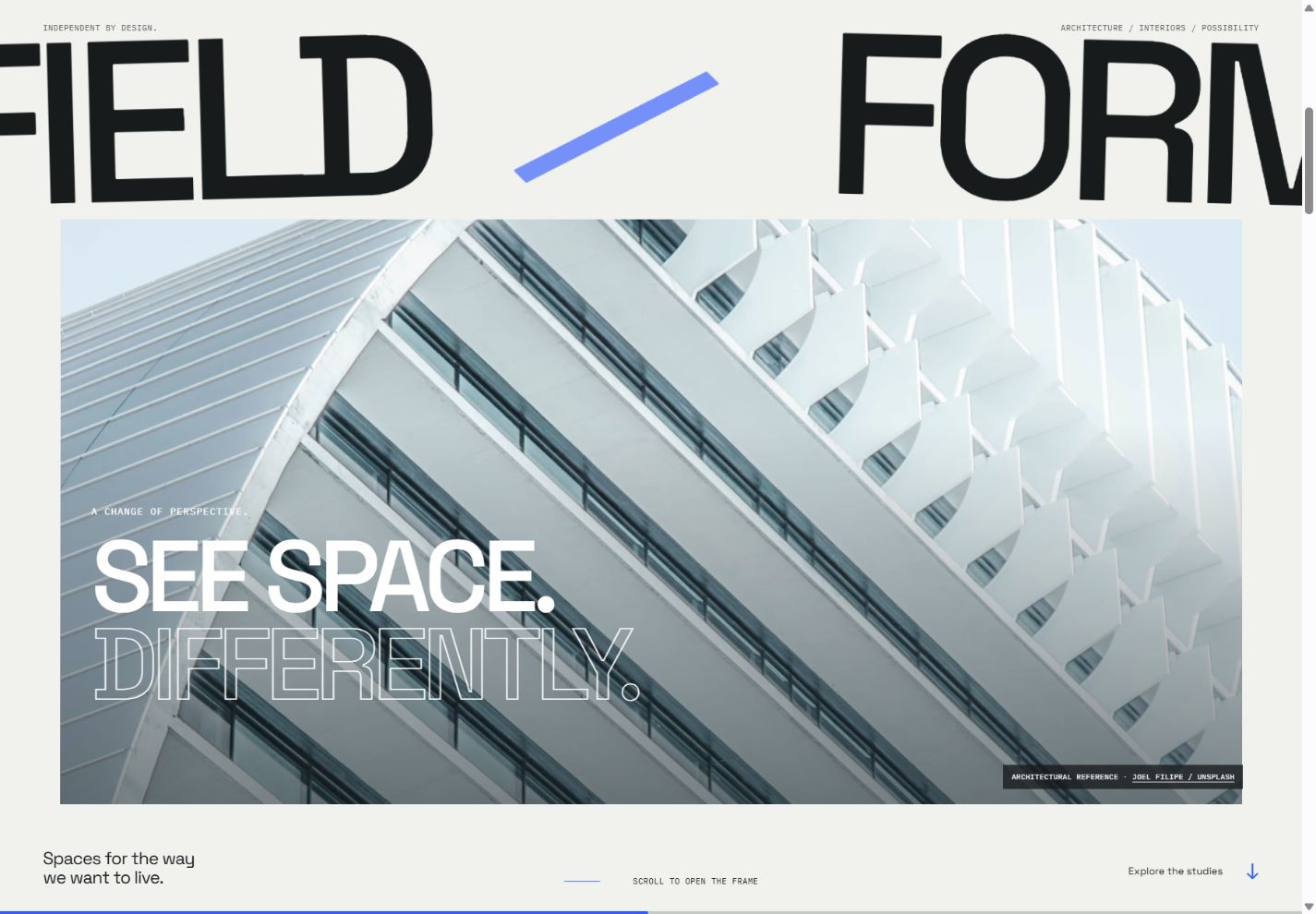
See the idea in action
FIELD / FORM
Try an architectural scroll story, project briefs and a colour-to-monochrome image study.
Original concepts for fictional brands, created by Singularity Shift.
Edit the portfolio around the work you want
Start by deciding which kinds of commission you want to attract. A photographer seeking commercial assignments may need a different selection from one focusing on personal portraits. A designer seeking identity projects should make that work easy to find among older experiments.
You do not have to display everything. A smaller selection with clear context can tell a more coherent story than a large grid in which visitors cannot distinguish current work from early practice.
Keep personal, experimental and commissioned projects honestly labelled. Personal work can demonstrate ideas and skill; it does not need to be disguised as a client brief. If an older project no longer reflects the services you offer, consider whether it still earns its place.
Give each project a useful amount of context
Let the work lead, then answer the practical questions a client may have. What was the brief? Who was it for? What constraints shaped the choices? Which parts did you deliver?
For collaborative work, describe your role and credit others accurately. A project involving a photographer, designer and developer should not imply that one person did everything.
Explain decisions in ordinary language. A paragraph about why a layout needed to work across a particular set of materials can be more informative than a string of creative adjectives. Include results only where you can substantiate them; you can explain the finished deliverable without inventing a commercial outcome.
If the project is confidential, decide what can be shown before publishing. Permission to work on something does not automatically settle permission to display every part of it.
Make images part of the user journey
Visual quality matters, but so does a visitor being able to reach the work. Prepare images for the sizes in which they will be displayed and check them on both a phone and a larger screen.
Avoid making visitors download full-resolution originals simply to view a project. Keep originals separately if you need them for delivery or print. Ask your developer how image sizing, loading and quality will be handled, then judge the result with the actual portfolio rather than placeholder pictures.
Consider the meaning of each image too. A caption can explain a detail; descriptive text can make the project's purpose understandable when someone cannot see the image. Do not rely on colour, hover effects or animation alone to reveal essential project information.
Example: a business commissioning a new identity
Imagine a Cheltenham business owner considering a designer for a new visual identity. This is a hypothetical example, not a reported client engagement.
They find a relevant project and see the original brief, the designer's role and a small set of applications. The explanation makes clear which work was delivered and credits any collaborators.
A service section then describes how an identity project starts and what information is useful for an enquiry. The visitor does not have to infer from a beautiful logo grid whether the designer offers strategy, a logo alone or a wider set of materials.
That context helps the owner ask a more specific question about their own project.
Connect the portfolio to an enquiry
A contact page should explain how to commission you. Invite visitors to describe the project, the deliverables they have in mind, any deadline and a budget range if they have one.
You can explain which details will be discussed later. Do not make someone write a finished creative brief before they can ask whether you are available.
Make your working location and arrangements accurate. Being based in Cheltenham can be useful to someone looking for local collaboration, while remote work may suit other projects. Describe what you actually offer rather than implying unrestricted travel or immediate availability.
The consultant website guide explores similar questions around service scope and evidence. If you also sell prints or products, see the independent shop guide.
Let visitors explore a design direction
In the FIELD / FORM concept, the opening photograph expands as you scroll, and a sequence of image sheets presents different architectural moods. Visitors can also select a project, read its fictional brief and compare colour and monochrome versions of the same reference photograph.
The useful lesson for a real portfolio is how an image can lead into an explanation. The effect should serve the project story, while the project name, your role and the enquiry link remain straightforward to reach. The architect and interior designer website guide looks more closely at organising spatial work, project status and photography. Planning website photography can help turn that direction into a usable set of images.
A portfolio review checklist
Before publishing, check:
- The selection reflects the commissions you want now.
- Every project identifies your role and its commissioned or personal status.
- Collaborators are credited and publication permissions are in place.
- Images remain clear without making the page cumbersome on a phone.
- Important explanations can be reached without hovering or playing animation.
- The enquiry route asks for information you will actually use.
For website design in Cheltenham, I can help give your work a clear setting and a practical route to enquiries. Send me a few representative projects and the kinds of commission you want to attract, so the portfolio can be organised around them.