
An architecture or interior design website needs to help someone imagine working with you. The photographs establish an initial impression; the surrounding information explains your judgement, the commissions you take on and how a project begins.
For a practice in Cheltenham, that means connecting visual character with a clear description of the work. Someone considering a home renovation will bring different questions from a business planning a new workplace. A useful site gives each a route into relevant projects and services.
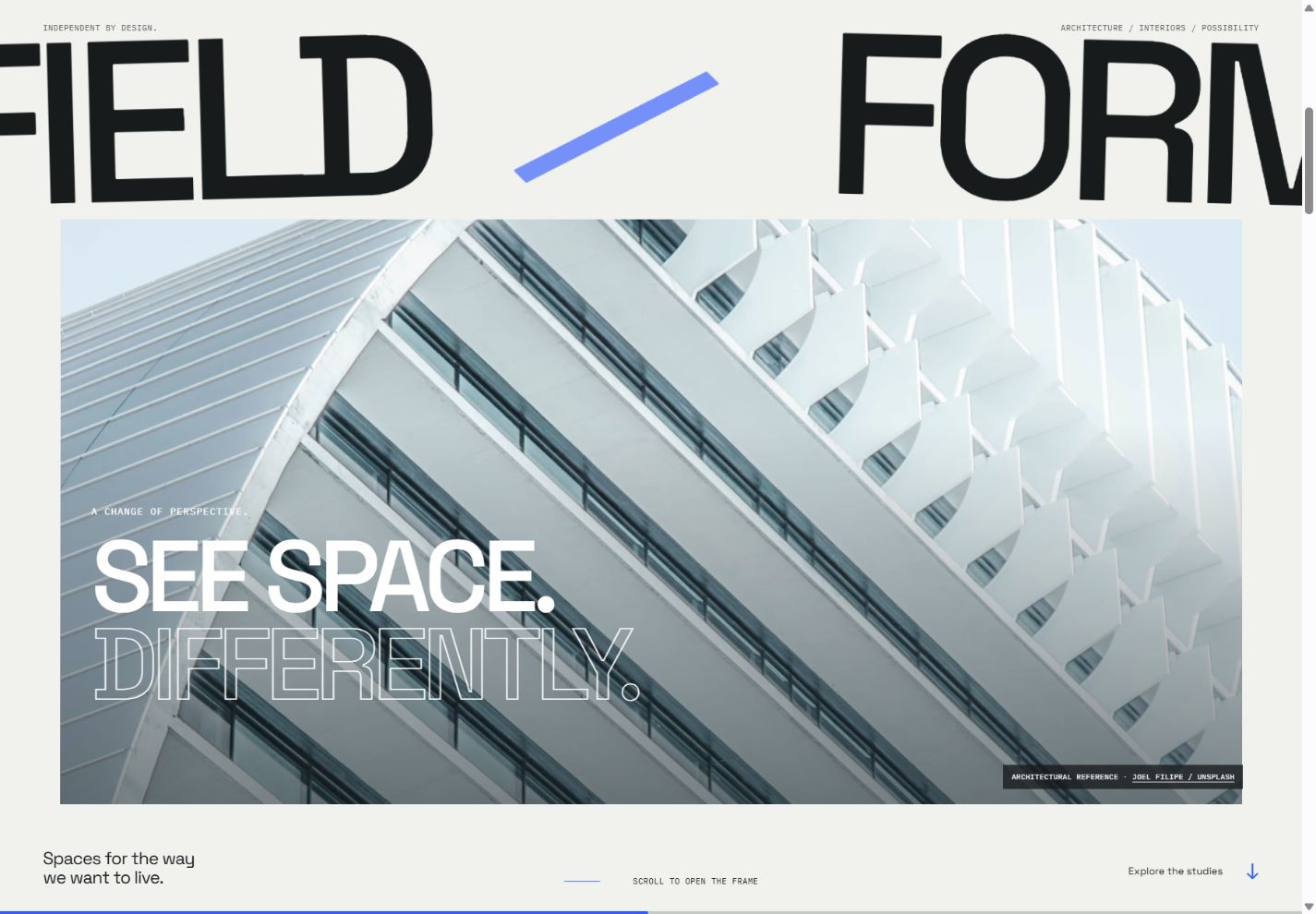
See the idea in action
FIELD / FORM
Try an architectural scroll story, project briefs and a colour-to-monochrome image study.
Original concepts for fictional brands, created by Singularity Shift.
Begin with the commissions you want to attract
Before choosing a large image or an unusual navigation menu, decide which enquiries the website should support. Consider the types of space, stages of work and geographical area you actually cover.
An interior designer specialising in lived-in family homes might lead with comfortable rooms, practical storage and materials that suit everyday use. A practice seeking workplace commissions might give more space to circulation, collaborative areas and the relationship between a brief and its layout.
Choose an opening project that supports that intention. A striking photograph from an unusual one-off commission can attract attention while giving visitors an incomplete picture of your normal work. Explain its place in the portfolio if it differs from your main offer.
Tell the story of a space
A project page can show how a decision changed the experience of a place. Give readers enough context to understand what they are looking at.
Useful project information includes:
- The original brief and the people the space needed to serve.
- A constraint that shaped the design, such as an awkward entrance or limited daylight.
- The part of the work your practice delivered.
- The decisions behind the layout, materials or lighting.
- The project's status and the people who contributed.
Pair the main view with details that explain those decisions. An overall room photograph establishes the setting; a closer view might show how a joinery detail solves a storage problem. A plan can clarify movement through a space, provided there is permission to publish it and a written explanation of the point it makes.
Keep completed photography, visualisations, proposals and personal studies clearly identified. Visitors should understand which ideas have been built and which remain exploratory.
Make your service boundaries visible
A beautiful sequence of images may leave a prospective client unsure what they can commission. Give services their own clear explanation, linked from the relevant projects.
Describe how an engagement begins, which stages you offer and what the client receives. Depending on your work, that could include an initial consultation, a design proposal, drawings, material selection or support during delivery. State the actual arrangement rather than borrowing a full-service description that exceeds your offer.
For collaborative projects, identify your role and credit others. Photographing, styling, designing and delivering a space are different contributions. Clear attribution helps a visitor understand the expertise they would be engaging.
Explore an editorial direction in FIELD / FORM
The FIELD / FORM architecture concept demonstrates one possible visual approach. Large typography introduces the identity. As the visitor scrolls, an architectural photograph expands from a narrow frame, followed later by a sequence of layered photographic sheets.
The project viewer provides a more deliberate interaction: visitors select a study, read its brief and compare colour with a monochrome treatment. This can prompt a useful conversation about form, rhythm and visual emphasis.
FIELD / FORM is fictional. Its project briefs are imagined, and its licensed photographs show existing architecture used as reference material. The comparison control changes the treatment of the same photograph; it does not show a building before and after a project.
For a real practice, this kind of presentation should be built around its own approved work. The visual approach is a starting point for discussion, with the amount of movement chosen to suit the audience and material.
Prepare photography for several ways of looking
A desktop opening, a phone screen and a small project preview require different compositions. Identify the feature that must survive each crop: an entrance, a sightline, a piece of furniture or the relationship between inside and outside.
Ask for a selection that includes both context and detail. Leave enough surrounding space where a title will sit, and test whether text remains readable over the actual image. The photography and art direction guide explains how to turn these needs into a shoot brief.
Visitors should also be able to understand the project through its written description. Photographs and drawings need appropriate text alternatives based on their purpose. W3C's image guidance explains the distinction between informative and decorative images.
Invite an enquiry you can act on
Ask for the type of space, its broad location, the scope being considered and the person's intended timescale. Give people room to say they are still exploring. An introductory enquiry should not require a completed design brief.
Make it easy to reach that route from a project page, including on a phone. A visitor who has already found a relevant example should be able to ask about their own project without watching every visual sequence.
For website design in Cheltenham, I can help organise your project stories, services and enquiry journey around the work you want to take on. Send James a few representative projects, along with what you want the next version of your practice website to communicate.